Showing posts with label red-necked grebe. Show all posts

Monday, 21 September 2020

Busy but quiet on the patch

The forecast suggested easterly winds and dry conditions on both Saturday and Sunday and we planned to get some nets up and ring birds on both days. A light mizzly, sometimes drizzly rain overnight and into Sunday morning prevented us doing anything on Sunday but we managed some ringing on Saturday.

It was a bit quiet though,  the wind was out of the east but it was bright and breezy and we only had four nets up so we only caught 19 new birds. A light passage of Meadow Pipits continued and we managed to catch four of them. A single Chiffchaff was the only warbler.

Meadow pipit - all four were juvenile birds

We went birding on Sunday morning as we couldn't put any nets up. Despite the wind being out of the east and overnight drizzle it didn't drop any birds in and was as quiet as Saturday had been. The WeBS count didn't take much doing - for some reason, despite the mud on the Budge fields, it's not attracting waders. There was decent Meadow Pipit and Skylark passage and when we got to the beach, there were 25 Meadow Pipits feeding on the seaweed around the Dunbar Burn - and a Wheatear.

Stonechat in the mizzle
Meadow Pipit on the beach

In the dunes to the north there is still a decent flock of Linnets and Goldfinches. It's not always the same flock as some days there are Linnets than Goldfinches and other days it's the opposite. As we walked along the cycle path, I got onto a bunting on the track, briefly, before it flew. There were a few reed buntings about but this was different - in the second or two I had it in my bins, the rufous cheeks stood out. 

The bunting bugged me all afternoon, at least it took my mind off the awful football game I was watching. I headed back after the footie for a mooch. Nothing on the fenclines or track so I headed into the dunes, there were a lot of finches still and a few Pipits and Reed Buntings. I put a bird up as I walked which gave off the distinctive call of a Lapland Bunting when it flew. It landed in a bare area and I got reasonable views of it before it flew it again I lost it behind a dune-hump. My first on the patch since 2010!

Wheatears were on the fence and on the beach still, but it was nearly dark when I took this.

Wheatear on the beach in the gloom of late evening

My pre-morning walk today was much busier and at times I didn't know where to concentrate on. I stepped out of the car to see a tit flock moving through the whitebeams, there was a few Chiffchaff amongst them and Yellow-browed Warbler - my first of the year and my earliest ever by one day! It was really active, chasing the Chiffs and Blue Tits. It and the tits moved off south as did I.

There were more Chiffs, at least 18,  in the bushes as well as four Blackcap, Lesser Whitethroat and Whitethroat. Overhead small groups of Siskin, Meadow Pipit, Lesser Redpoll and Skylark flew over - eight Skylark appeared to come in-off the sea as did 38 Pink-footed Geese.

One of 18 Chifchaffs

Another Meadow Pipit

Young Stonechat

Chaffinch - not common this year

Save for six Curlew there were no waders or duck on the virtually dry Budge fields, maybe because a juvenile Marsh harrier was sat on the big post? It took off and had a go at one of the many Pheasants and I managed a couple of shots. It appeared to have a metal ring on its right leg.

Juvenile Marsh Harrier over the Budge field

With an eye on a pheasant

No waders here

This evening I had a look on the sea after work, It was high tide and a big spring tide so I hoped for displaced waders passing, none of those but I did have a trio of grebes.

There's been two Great-crested Grebes, an adult and a juvenile for a few weeks, they hang about with the Scoter flock and I've watched the adult moult into winter garb and the juvenile loose a bit of its stripy look in that time.  Just beyond the Scoters, I picked up another, smaller grebe - a Slavonian Grebe in winter plumage - a regular in the Bay but nice to see. As I counted the Red-throated Divers (28 in total), I found another grebe, close to the Slavonian grebe - a Red-necked Grebe, also in winter plumage. 

At times the two grebes were together giving a great opportunity to compare these two similar looking grebes. The red-neck, slightly bigger than the Slav and not as clean, crisp looking, much darker around the face and neck with a more sloping forehead.  

So it's been a busy few days even though the birding has been quiet at times, but some nice birds made up for it. 

All my lists are on eBird
Monday, 4 September 2017

Scarce grebes

It's been a weekend of scarce grebes on the patch.

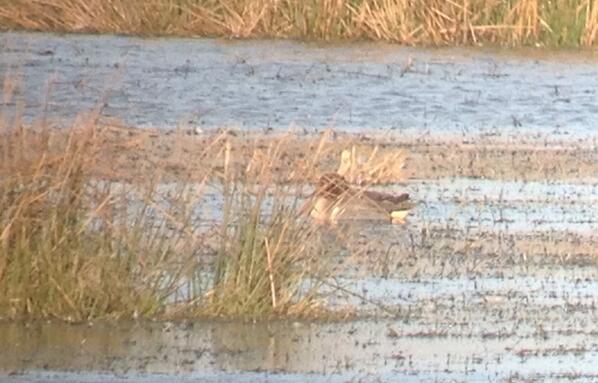
On Friday a juvenile red-necked grebe was reported on the sea to the south of Chibburn Links. I headed down there in my lunch break and picked up the grebe with a raft of scoter about half way between the Dunbar burn and Chibburn mouth. Red-necked grebes have always been scarce on the patch, my last was in January/February 2014 but most records on the patch have come from September and October. The species was more regular in the early 2000's, I saw them every year from 2002-2006.

Today a report came of a black-necked grebe on Druridge Pool, I trapped in the office so had to head down there when I got home, which I did. Colin and Jimmy were in the hide when I got there and were watching the bird and got me onto it. Another juvenile, it was hanging around with a group of tufties and coot on the edge before making it's way towards the floating island.

Incredibly, this is my first patch black-neck since 2005, when there was juvenile on the pool (there was also a red-necked grebe on the sea that day).  I'd only seen two before that, A juvenile for a couple of days in August 2002 and an adult int he May of the same year.

This makes black -necked grebes scarcer than long-tailed skuas, spotted crakes, sabine's gulls and red-breasted flycatchers on the patch!

I've not see much else on the patch at the weekend, I was too busy buffing my marrow for the village show...

Sunday, 2 February 2014

Yank Teal

I finally managed to see the green-winged teal today, it turned up at Druridge whilst I was in Sri Lanka but I've missed it on two visits.

It was on the Budge fields, spending its time alone, away from the other teal. This is the first Druridge record since 2011, another long-staying drake.

Embedded image permalink
iPhone-scoped drake green winged teal
The Budge fields are still holding decent numbers of wildfowl, including about 20 shoveler, a single pintail and a shelduck. Shelduck are normally a February addition to the list, so this one is quite early. There were also two black-tailed godwits.

The female type common scoter was back/still on the big pool, but little else of note.

I had a half-hour look on the sea. There are still lots of red-throated divers and an unusually high count of over 50 guillemots. I'm not sure why there are so many guillemots in the Bay this winter. Amongst the guillies and divers there was a red-necked grebe, great-crested grebe and a first-winter drake velvet scoter (which was on its own, well away from the main scoter flock). There were a couple of kittiwakes feeding offshore.

63 shelduck
64 green-winged teal
65 moorhen
66 greylag goose
67 velvet scoter
68 great crested grebe
69 kittiwake

PWC Score 85 Points

Saturday, 11 January 2014

A bit of a wander roond the patch

I had a bit of a wander to the far flung ends of the patch today.

After seeing twite and pied wag on the dunes to the south, my route took me firstly to the Oddie hide, but not before I had stopped to look at a lone whooper swan on the Budge fields. Initially the big pool looked empty (for some reason when the pool is full (the outflow is blocked with flotsam and jetsam) there are never any birds on it - an edge thing?) other than a handful of tufted duck and teal, then a long-tailed duck popped up in the middle of the pool. Then, when I scanned the seaward side, a red-throated diver had appeared. It didn't hang around long before it flew off towards the south.


red-throated diver. A rare visitor to the big pool
My route then took me to the preceptory, which was owl-free, and then down to High Chibburn Farm where a flock of 200 or so golden plover lifted off the fields. At the farm  house sparrow, collared dove and dunnock were added to the year list. At the cottages, tree sparrows and a great tit were coming to the feeders.
Low Chibburn Preceptory

In front of the cottages, a skein of over 2000 pink-footed geese dropped in. I scanned them later in the scope, they were all pink-feets.

Whiffling
Pink-footed geese settled for a graze
Four pintail were on the Budge fields and two black-tailed godwits with the usual teal, wigeon and shoveler.

Offshore there were at least 77 red-throated divers in the bay, among them was a red-necked grebe, a good patch bird. Also on the sea were at least 25 guillemots and a couple of razorbills, mergansers and shags. A single sanderling was on the beach.

40 chaffinch
41 twite
42 pied wagtail
43 rook
44 gadwall
45 grey heron
46 jackdaw
47 golden plover
48 dunnock
49 house sparrow
50 woodpigeon
51 tree sparrow
52 great tit
53 collared dove
54 pintail
55 red-necked grebe
56 shag
57 cormorant
58 razorbill
59 red-breasted merganser
60 sanderling
61 eider
62 whooper swan

PWC score 74